
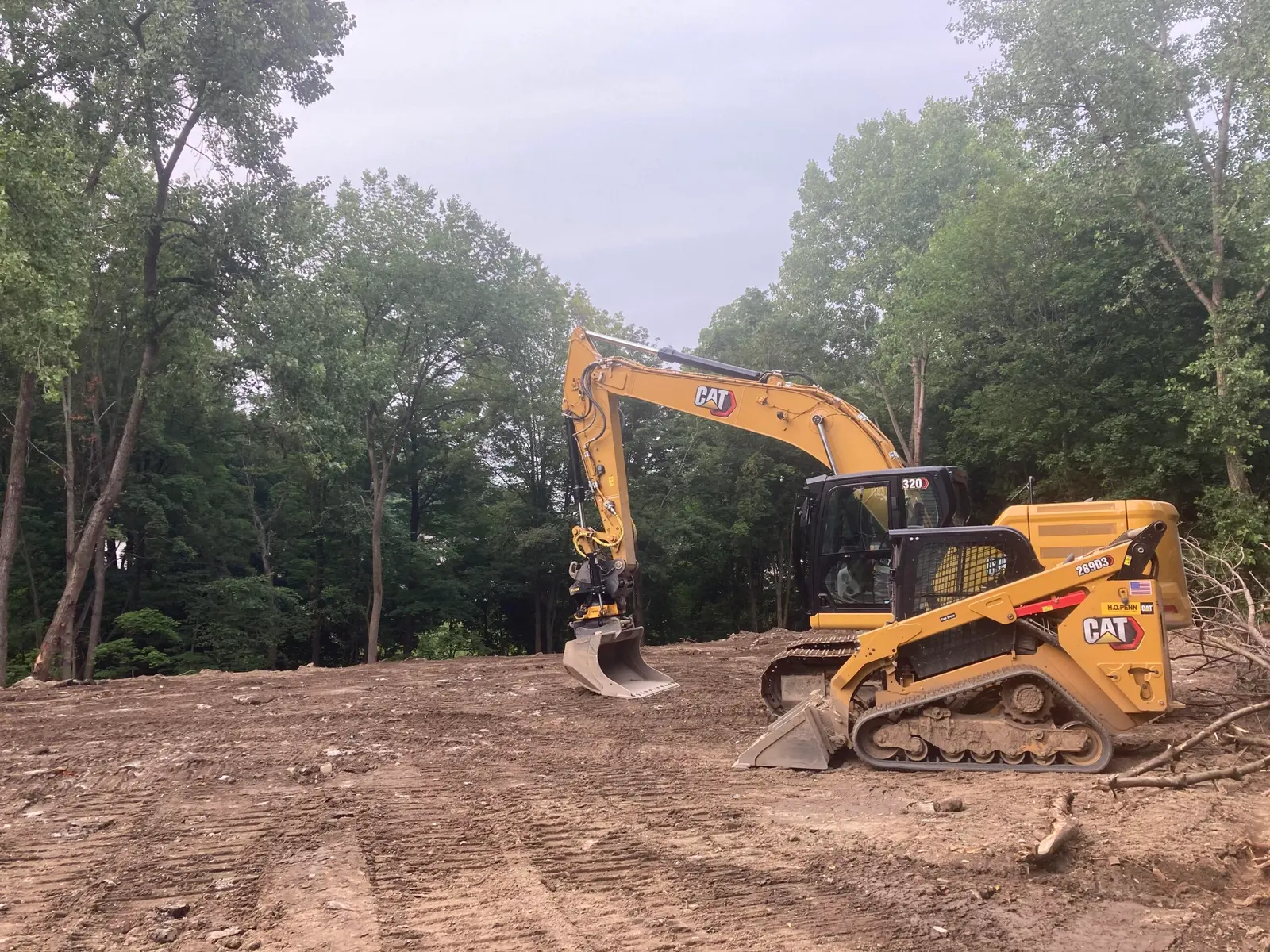
Restoring land. Reclaiming value.
Land Reclamation in Paradise Valley, Montana
Ground takes hard use out here — construction scars, erosion cuts, blown-out two-tracks, overgrazed pasture, and projects that ended before the cleanup did. EZ Road Repair reclaims disturbed and neglected land across Emigrant, Livingston, Pray, Chico, Gardiner, and the rest of Paradise Valley: reshaping the terrain, fixing the water problem underneath, and leaving ground that will hold cover again. Reclamation isn’t landscaping. It’s earthwork with a drainage plan on the front end and a seedbed on the back end.
When this matters
- Erosion gullies and cut slopes that get deeper every runoff season
- Ground torn up by construction, septic work, or utility trenching that needs putting back
- Trench lines settled into ruts across a hayfield, driveway, or yard
- Overgrown or overgrazed ranchland going back into production
- Old logging roads, two-tracks, and homestead sites to reopen — or retire cleanly
- Burned-over or slide-scarred ground that needs stabilizing and reshaping
The water caused it, so the water gets fixed first
Nearly every piece of degraded ground we look at is a water story. A road sheds runoff to one low point, that point cuts a rill, the rill concentrates the next melt, and three seasons later there’s a gully you can lose a calf in. Reshaping the damage without changing where the water goes only resets the clock.
The first work happens upslope of the damage: intercepting and spreading the flow with swales and ditches, fixing the discharge point that started it, and getting culvert outlets to release water somewhere that can take it. Only then does the gully get repaired.
And a gully doesn’t get smooth-filled. Loose material dumped into a flow path is stored sediment, sitting in the one place water is guaranteed to arrive. Fill in a drainage path goes back in compacted lifts, keyed into benched-back sidewalls rather than lapped over slick undisturbed faces, with the head cut stabilized and the flow line armored in rock sized to the flow.
Topsoil, compaction, and whether anything will actually grow
This is the half of reclamation people skip, and it’s why so much “restored” ground sits bare for years.
Topsoil is a finite resource on the site. Around here it’s often only a few inches deep, and once it’s mixed into subsoil or buried under fill it’s gone. We strip it, stockpile it separately, keep the piles low, and get it back down as soon as the grading below is done.
Compaction from the restoration itself is the usual killer. Loaded trucks and tracked machines leave a subsoil layer roots won’t penetrate and water won’t move through. Ground going back to pasture or native cover gets ripped before topsoil goes down, with the rip lines running across the slope — ripping up and down a hillside just builds miniature drainage channels. The interface between the two layers gets scarified so they bond; loose topsoil on a smooth compacted surface slides off the first wet spring.
Freeze-thaw punishes bare ground twice. Needle ice on exposed fine soils lifts the surface and pops seedlings out by the root, and frost heave lifts loose fill and leaves voids when it lets go. A slope left bare going into October loses material before the melt even starts.
Disturbed soil is an invitation. Bare ground in Park County fills in with cheatgrass, spotted knapweed, and Canada thistle faster than with anything you want. Closing a site up and seeding it on a sensible schedule is weed control as much as erosion control.
Where reclamation goes wrong
- Filling the gully and calling it done. Nothing changed upstream, so the flow returns to the same line.
- Loose fill in a drainage path. Uncompacted material in a flow path is sediment in storage, not a repair.
- Topsoil buried or blended into subsoil. The seedbed disappears into the fill and isn’t cheap to buy back.
- Seeding onto compacted ground. Seed germinates, roots hit hardpan, and the stand thins out by the second summer.
- Working clay wet. Tracks smear and seal saturated fines right where you need infiltration.
- Culverts abandoned in place. A pipe left in a retired road plugs, acts as a dam, then takes the fill out with it.
- Oversize rock left in the top lift. Buried shallow, it works to the surface with frost and turns a hayfield into a rock-picking chore every spring.
How we approach it
We walk the ground first and read where the water comes from, where it goes, and what it did on the way. From there the sequence is usually: clear the debris, brush, and slash — land clearing, with demolition where something is still standing; fix the drainage above the damage; reshape and grade the ground to stable slopes that drain; place fill in compacted lifts and armor the flow paths with riprap and rock sized to the site. Then the finish work — decompaction, topsoil respread, and a firm, workable seedbed. Ground that carries traffic gets rebuilt to drain rather than smoothed over, and damage fresh off a hard melt is often spring runoff repair and reclamation on the same trip. Same equipment and same eye we bring to excavation and earth moving and erosion control, pointed at healing ground instead of opening it.
Late summer and fall are the honest window: spring damage is visible, the ground is workable, and the fix is in before the next melt tests it.
Serving Paradise Valley & Southwestern Montana
Based in Emigrant, we reclaim land throughout Paradise Valley — Livingston, Pray, Gardiner, Chico — and the surrounding ranch and backcountry, including remote parcels.
Get a land reclamation estimate
Call (406) 623-9075 or request a quote. Tell us what happened to the ground, where the water comes from, and what you want the site to become, and we’ll walk it and give you a straight plan and estimate.
EZ Road Repair and Excavation — locally owned, Montana tough.