
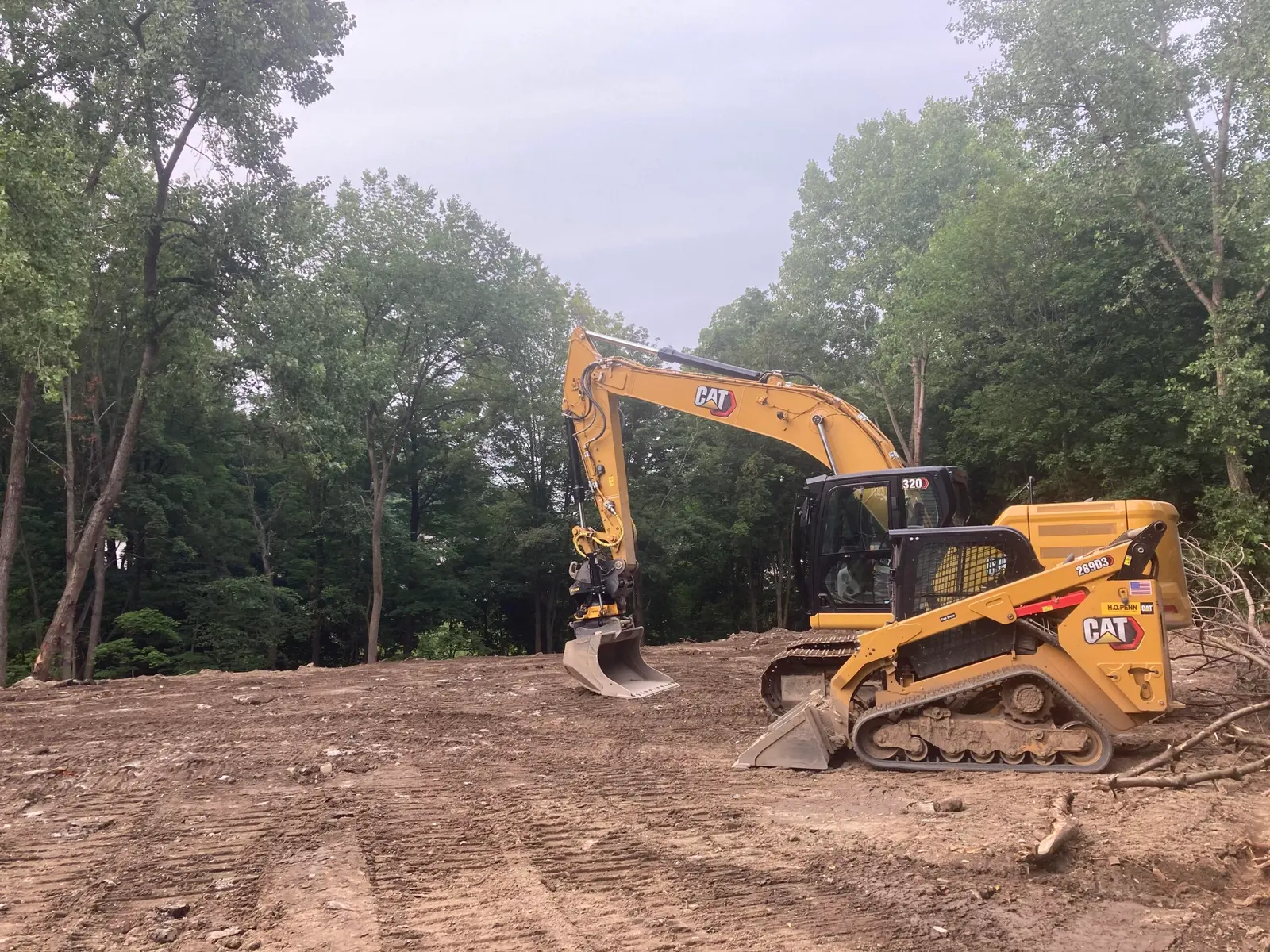
A fence is only as good as the ground you can see it from.
Fence Line & Brush Clearing in Paradise Valley, Montana
Brush never stops testing a fence. It grows into the wire, hides the breaks, shades the posts so they stay wet and rot, and leans harder every season until a fence somebody built straight runs down the middle of a hedge. EZ Road Repair clears fence lines, corridors, and brush across Emigrant, Livingston, Pray, Gardiner, Chico, and the length of Paradise Valley — with the equipment that makes miles of line practical instead of a summer of chainsaw work.
This is linear work: along wire, along a driveway, along a ditch, around a set of buildings. A whole parcel opened and grubbed for a build is land clearing — different scope, different machine setup. Plenty of properties want both.
When this matters
- Fence lines grown shut — invisible, unreachable, impossible to repair without a machete
- New fence corridors that need opening and grubbing before the fencing crew arrives
- Brush closing in on pasture edges, irrigation ditches, and two-track access trails
- Defensible space: fuels crowded up against homes, cabins, barns, and outbuildings
- A driveway approach where you can no longer see up the road before you pull out
- Overgrown corners the property has been losing back to the willows
What a brushy line actually costs you
The fence is the obvious loss. Wire under steady pressure from a leaning chokecherry or Russian olive stretches and stays stretched, staples pull, and a line you can’t see is a line you can’t fix — so you find the break after stock is through it.
The less obvious cost is snow. Brush works exactly like a snow fence, and a snow fence does what it is built to do: slow the wind so it drops its load on the lee side, out to several times the height of the barrier. A brushy line upwind of your driveway or county road approach builds drifts in the one place you least want them, and clearing it makes snow removal faster all winter.
Then there is water. Willow and volunteer growth in a roadside or irrigation ditch slows the flow, catches debris, and packs a culvert inlet solid — and a plugged inlet during runoff sends water over the road instead of under it. That is how a brush problem becomes a culvert and ditch problem.
Cutting is not clearing
Most of what grows into a Montana fence line resprouts from the roots. Aspen suckers, willow, chokecherry, snowberry, and wild rose all come back from a cut stump — thicker than what you took off, because one stem becomes six. Mow the tops and you have bought one clean season and a harder job next time.
Whether the roots come out depends on the line. Where new fence is going in, or a corridor has to stay open for years, grubbing the root balls is the work that holds. Where the goal is a maintained edge, cutting low and following up is a fair plan — as long as everyone knows that is what it is. Disturbed ground is also an invitation to spotted knapweed and houndstongue, so getting cover back on bare soil, with erosion control on slope, is part of the job.
Where this goes wrong
- Mulching over buried wire. Old woven wire, staples, and forgotten t-posts hidden in the brush get shredded and thrown across the pasture — a real hazard to livestock and tires. The wire comes out first, by hand.
- Wire grown into trunks. Trees that swallowed a fence years ago carry steel inside the wood, which changes how the tree comes apart. Better to know before the saw finds out.
- Pulling instead of cutting. Brush grown through the wire cannot be yanked without taking the fence with it. Tight to the line it gets cut in place and dropped away.
- Working wet ground. Tracks and haul trucks rut a soft spring line badly, and those ruts become the drainage path along your fence.
- Ignoring where the water goes. Once the cover comes off a sidehill line, runoff follows the cleared strip, so drainage gets settled first — and slash piles belong off the buildings and out of drainages.
Defensible space along the edges
Around structures the goal is not a bare lot but broken-up fuel, so fire on the ground cannot climb into the crowns and run at the building. Out here the edges do the damage: a brushy fence line running right to the house, a wooden fence tied into a deck, a driveway so overgrown the fire truck coming in and you going out cannot pass. Ladder fuels — brush and small conifers under mature trees — carry fire upward, and they pile up along lines nobody walks. Check current Montana DNRC and Park County guidance for the zones around your address.
How we approach it
We walk the line with you first and agree on what goes, what stays, where the slash ends up, and where water will run once the cover is off. Old wire and posts come out ahead of the machines. Then we match equipment to the ground — tight work along existing wire, heavier clearing where the corridor is open — grubbing roots where regrowth would undo the job, cutting low where it would not. Debris gets hauled off or piled where you want it.
Clearing usually uncovers the next thing: a two-track worth reopening as a ranch road, a washed section needing regrading, ground beaten up enough to want land reclamation. Same crew, same equipment, already on site.
Serving Paradise Valley & Southwestern Montana
Based in Emigrant, we clear fence lines and brush throughout Paradise Valley — Livingston, Pray, Gardiner, Chico — and the surrounding ranch country.
Get a fence line and brush clearing estimate
Call (406) 623-9075 or request a quote. Tell us roughly how many feet of line or acres of brush, what is growing in it, and what the access looks like.
EZ Road Repair and Excavation — locally owned, Montana tough.