
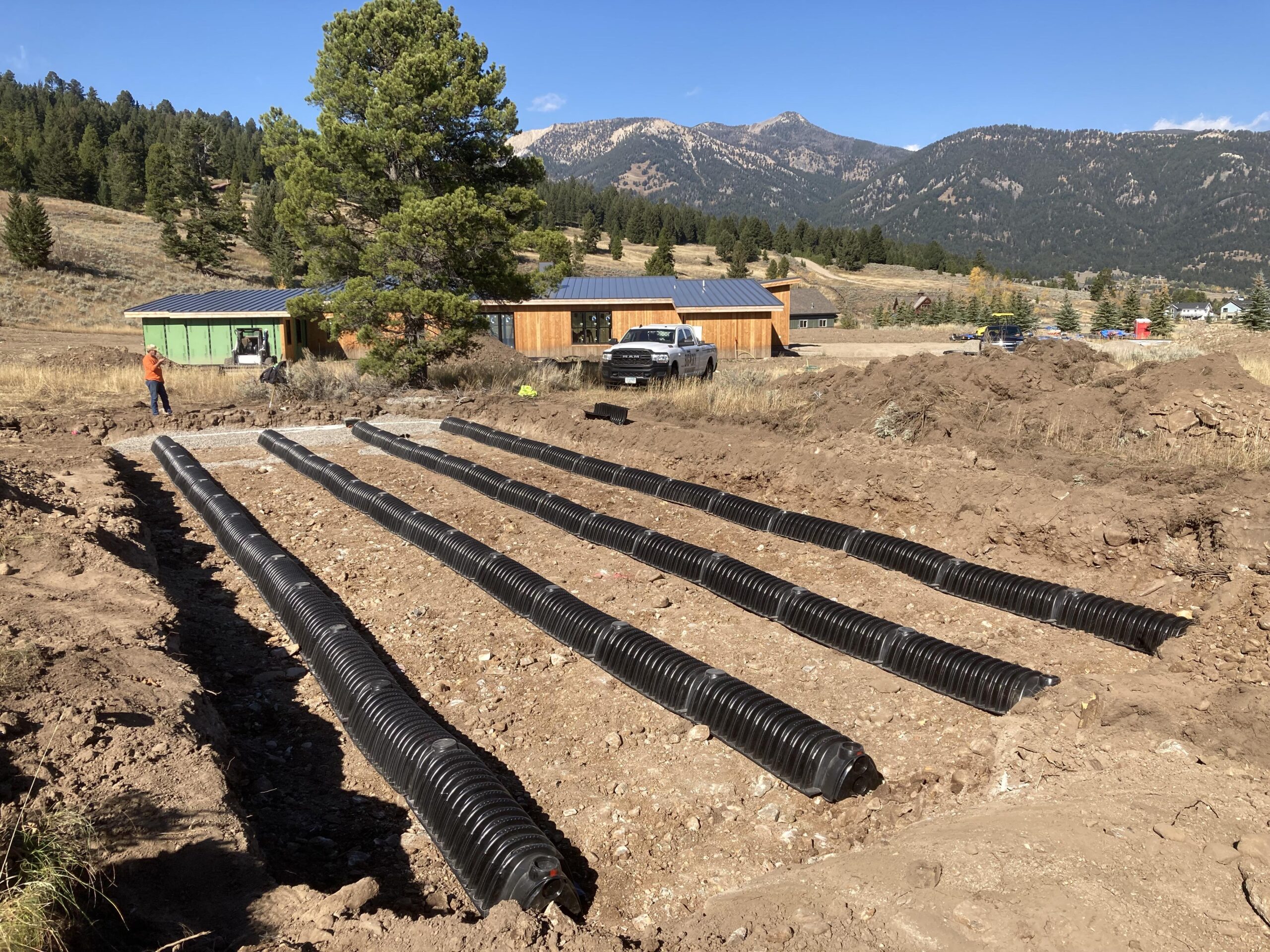
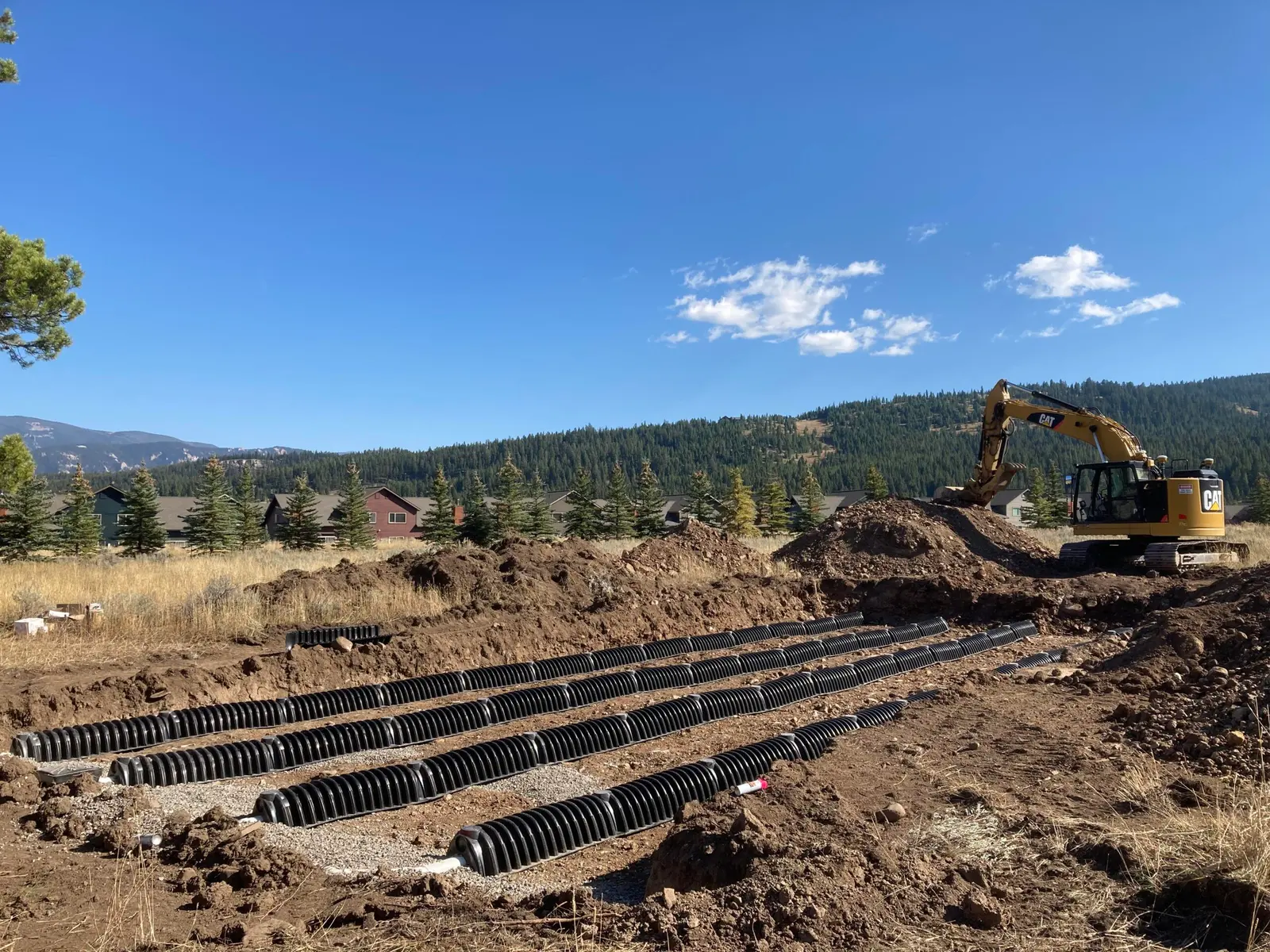
A rural home's wastewater system, built where it can't be seen and has to work for decades. This documented drain-field installation shows the part of septic work that decides system lifespan: trenches at true grade, lines bedded to the approved design, and ground restored so the field disappears into the property.



Built to the approved design
Septic is permitted, regulated work — the site evaluation and permit establish what the soil can handle, and the installation's job is to build exactly that. Field layout, trench depths, and line spacing follow the approved design; the discipline is in holding true, steady grades so effluent distributes evenly across the field instead of overloading one line.
Trenching and setting the lines
Field trenches cut at consistent depth and grade, lines placed and bedded to spec. The excavation quality here is invisible in a week and decisive for decades — uneven trench grades are how fields fail early on one side while the rest sits unused.
Restoration
Backfill and finish grading return the field to clean, usable ground, shaped so surface water sheds away from the field rather than soaking into it. A properly restored field reads as ordinary lawn or pasture — the only visible sign of the system is that everything works.
Have a similar project? Tell us what your ground is doing and we'll walk it with you.