
A raw Madison Valley parcel taken from sagebrush to a slab-ready building site. This sequence — clearing and stripping, the foundation dig, and slab preparation — is the ground work every rural Montana build stands on, documented here across one project.


The starting point
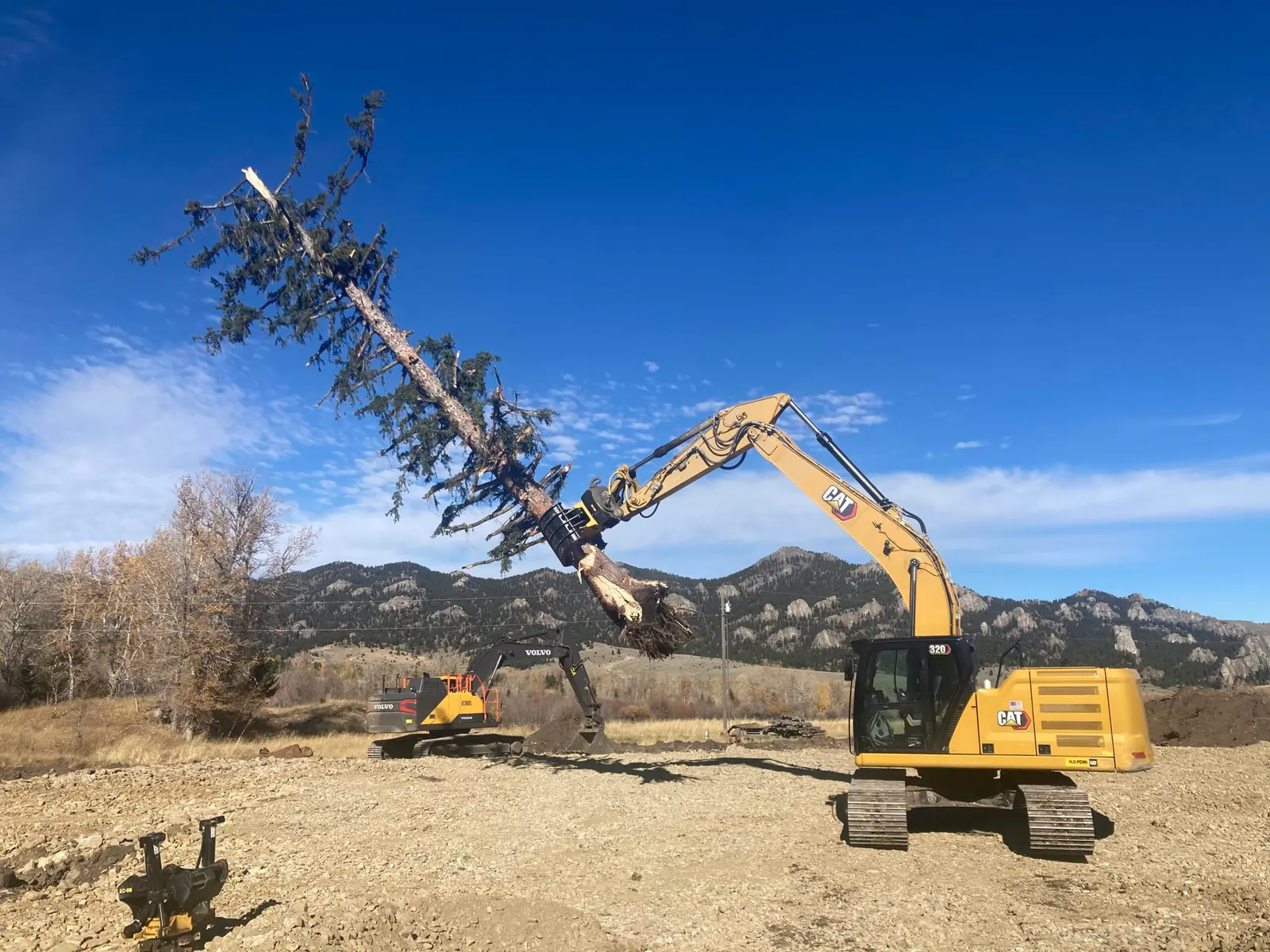
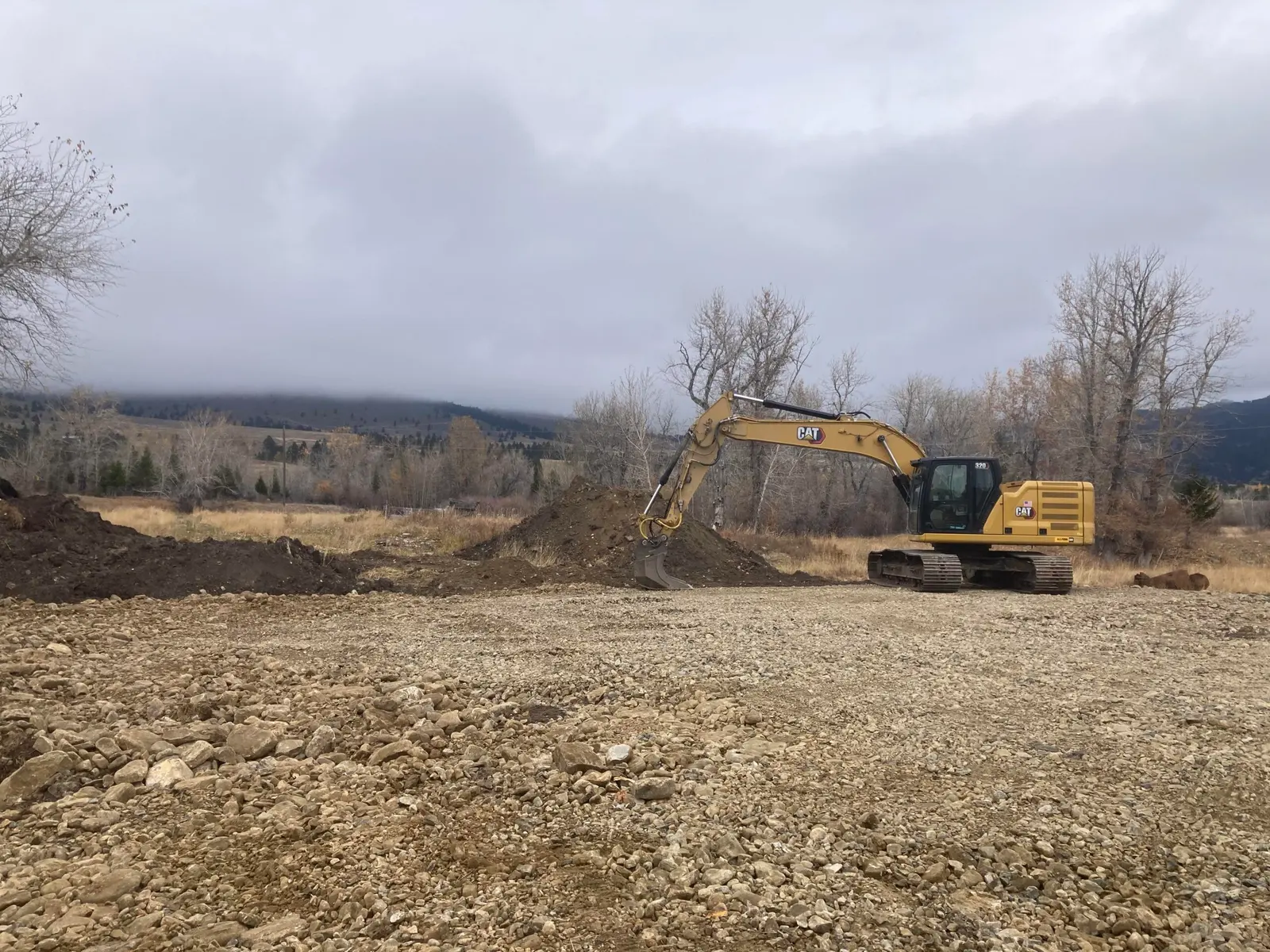
Undeveloped ground with vegetation and topsoil across the building footprint. Before anything structural can happen, the organics have to come off — topsoil compresses and rots, so nothing load-bearing gets built on it. The site was cleared and stripped, with the footprint opened up for the dig.
The dig
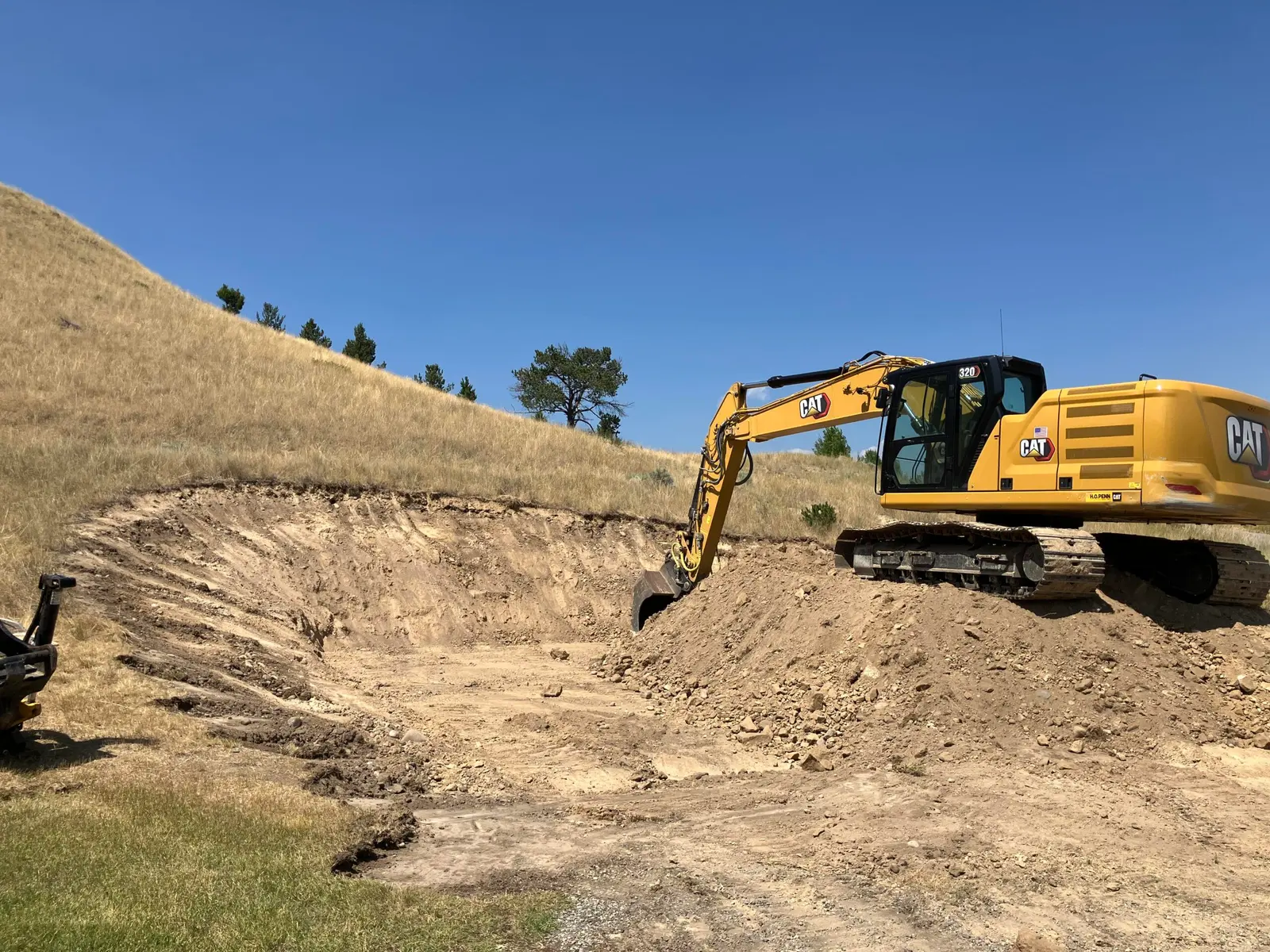
Foundation excavation with the 320 excavator: cut to plan depth, the bottom of the excavation kept clean and undisturbed for footings, and spoils managed on site for reuse in backfill and grading. Digging to the plan — depth, lines, and grade — is what hands the concrete crew a site they can start on instead of fix.
Slab preparation
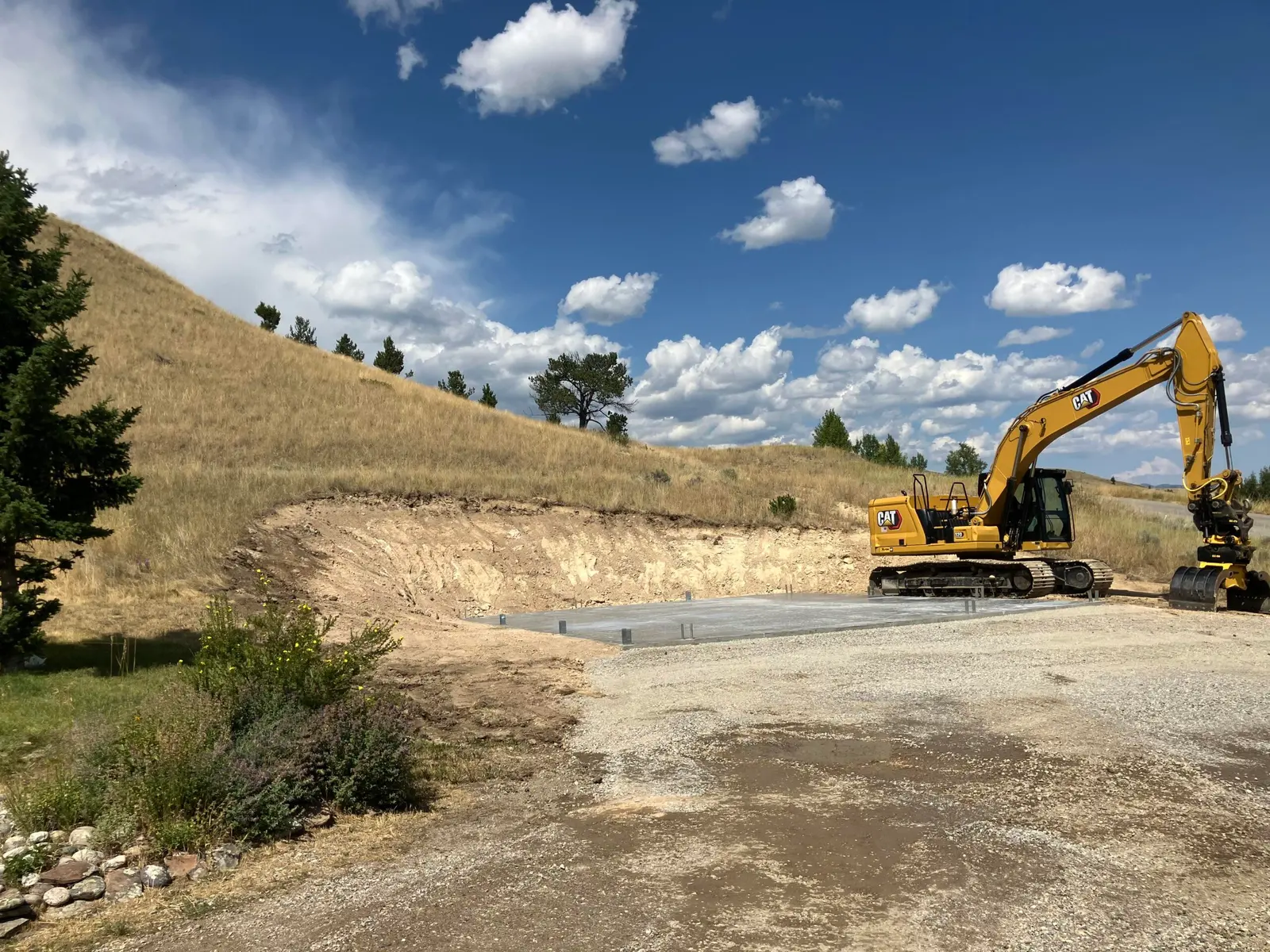
The slab area brought to grade and prepared for the pour: base material placed and compacted so the finished slab bears on ground that is done moving. Compaction in lifts at this stage is the cheapest insurance a building ever gets — settling prevented here never becomes a crack later.
Why it is built this way
Every step follows the same drainage-first, compaction-always discipline we use on roads: strip the organics, dig to spec, compact what carries load, and shape the ground so water leaves. The result is a site where the foundation, plumbing, and framing crews all start on schedule.
Have a similar project? Tell us what your ground is doing and we'll walk it with you.